Is sauerkraut probiotic? A shopping guide to ferments with live cultures
Fermented does not mean live. Which foods still contain living microbes, the label words that tell you, and what a Stanford trial did and did not show.
Short answer
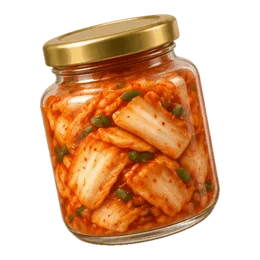
Sauerkraut is only likely to contain live microbes if it was not heated after fermentation. Pasteurized jars and cans do not, while a refrigerated jar labeled raw or unpasteurized usually does. Strictly, none of them is “probiotic” unless the strains have been shown to benefit health. The useful question for shopping is simpler: was this ferment heat-treated? Yogurt, kefir, miso and non-heated vegetable ferments are in the live group; bread, soy sauce and vinegar pickles are not.
Key takeaways
- Fermented describes how a food is made. Probiotic means live microbes with a shown benefit. Most fermented foods are never tested to that standard.
- Heat after fermentation removes the live microbes. The expert panel puts pasteurized sauerkraut, bread and soy sauce in the “live microorganisms absent” group.
- Pickles preserved in brine or vinegar are not necessarily fermented at all. Look for the word “fermented”.
- In a 10-week Stanford trial of 36 adults, the fermented-food diet raised microbiome diversity and lowered 19 inflammatory proteins. Participants bought their own products, and the study did not confirm that each was live.
- Outside kefir, sauerkraut, natto and sourdough, no randomized trial had tested common ferments for gut effects when one review last looked.
Two jars of sauerkraut can sit twenty steps apart in the same supermarket, one on a shelf next to the canned tomatoes and one in the chilled aisle, and only one of them is likely to hold living bacteria. Labels do not make this obvious, so here is how to tell.
Fermented is not the same as probiotic
An international expert panel defined fermented foods in 2021 as “foods made through desired microbial growth and enzymatic conversions of food components”.1 That is about process. It says nothing about whether any microbes are alive when you eat the food.
“Probiotic” is narrower: live microorganisms that, in adequate amounts, give a health benefit, with the benefit shown for the specific strain.2 The same panel advises that fermented foods should only be labeled as containing probiotics when there is evidence that their live components provide health benefits and the microbiological content is defined.1 Almost no sauerkraut jar meets that.
The live-or-not table
The panel sorted foods by whether live microorganisms are present in the product as sold.1
| Food | Live microbes? | Watch for |
|---|---|---|
| Yogurt, sour cream, kefir | Present | Heat treatment after fermentation removes them |
| Sauerkraut and kimchi, not heated | Present | Words like “raw” or “unpasteurized”, sold chilled |
| Sauerkraut and kimchi, pasteurized or heat-treated | Absent | Usually the jar on the shelf |
| Miso, natto, tempeh | Present | Cooking kills them, and tempeh is normally cooked |
| Most kombucha | Present | Some brands are pasteurized or filtered |
| Most cheeses | Present | Varies by cheese and process |
| Bread, including sourdough | Absent | Baking |
| Soy sauce, vinegar | Absent | Heated or filtered |
| Wine, most beer | Absent | Filtered or heat-treated |
| Cucumbers pickled in brine or vinegar | Not fermented | Only “fermented” pickles qualify |
That last row trips people up. Under the panel’s classification, vegetables pickled in brine or vinegar are not fermented foods at all. Check the label for the word “fermented”.
Reading the label
The expert panel notes that a producer may claim “live and active cultures” provided the food has not been processed to kill the microorganisms and they are present at the expected level. For pasteurized ferments, “foods made by fermentation” is an accepted label.1 So:
- Good signs: “raw”, “unpasteurized”, “live and active cultures”, a short ingredient list of vegetables and salt, and a place in the fridge.
- Warning signs: “pasteurized”, vinegar in the ingredients, “foods made by fermentation”, shelf storage at room temperature.
The chilled aisle and the vinegar check are our own shortcuts, not the panel’s, and exceptions exist. The label wins.
What the research shows
The best human data on fermented foods comes from a Stanford trial in Cell. It randomized 36 healthy adults to a high-fiber diet or a high-fermented-food diet for 10 weeks. The fermented group averaged 6.3 servings a day by the end of the maintenance phase. Their microbiome diversity rose steadily, and 19 of 93 inflammatory proteins fell, including interleukin-6. The high-fiber group showed no cohort-wide diversity increase over the same period.3
Read it with its limits in mind. There were 18 people per arm. Participants bought their own products, so the trial cannot tell you how many servings were live.3 And six servings a day is far from typical.
Sauerkraut itself has been tested directly. In a 2025 crossover trial in Microbiome, 87 healthy adults ate fresh or pasteurized sauerkraut daily for 4 weeks. Single bacterial species changed after both versions, more so after the pasteurized one, and only the pasteurized sauerkraut raised serum short-chain fatty acids. The authors concluded that the gut microbiome of healthy people is rather resilient to short-term dietary changes.6 That the pasteurized version moved the numbers more is a reminder that live bacteria are not the only thing a jar of sauerkraut brings, which fits the advice further down.
A 2019 review looked at the wider picture: the only fermented foods that had been tested in a randomized trial for gastrointestinal effects were kefir, sauerkraut, natto and sourdough bread, and it concluded there is very limited clinical evidence for most fermented foods in gut health.4 Fermented foods are promising, not proven.
Are pasteurized ferments still worth it?
They are still food. Pasteurized sauerkraut is still cabbage, and fermentation changes a food in ways that survive heating. Whether dead microbial cells help is a separate question. A 2021 panel defined “postbiotics” as preparations of inanimate microorganisms or their components that give a health benefit, and set out the evidence a product needs to qualify.5 So buy pasteurized sauerkraut because you like it and want the cabbage, not for live bacteria.
When to be careful
If you are pregnant, immunocompromised, or have been told to avoid unpasteurized foods, follow that advice. Fermented foods can be high in salt, and people with histamine intolerance sometimes react to them. Add them slowly: gas is common at first.
Frequently asked questions
Does pasteurized sauerkraut have any benefit?
It is still cabbage, so you get its fiber and plants, plus compounds made during fermentation. It does not add live microbes. Dead microbial cells are a separate category the 2021 ISAPP panel calls postbiotics, but we would not buy pasteurized sauerkraut for that.
How much sauerkraut should I eat?
There is no official amount. A forkful or two a day is a common starting point, and it is salty, so watch portions if you limit sodium. Start with a small serving if you are new to ferments. In the Stanford trial, the fermented group averaged 6.3 servings a day of a mix of foods by the end, which is far more than most people eat.
Is store-bought kimchi probiotic?
Kimchi that has not been heat-treated is in the live-microbe group. Shelf-stable or canned kimchi has typically been heated. The word “probiotic” is a separate bar: it needs evidence for the strains.
Is sourdough bread probiotic?
No. Sourdough is fermented, but baking removes the live microbes. The ISAPP expert panel lists bread in the group without live microorganisms.
Is yogurt probiotic?
Yogurt is made with live cultures and sits in the live group, unless it was heat-treated afterward. Calling it a probiotic strictly requires evidence for the specific strains. As an everyday ferment, live yogurt is a fine choice.
Sources
Figures, study results and official recommendations in this article come from these sources. Everyday cooking and shopping tips are our own judgment.
- Marco ML, et al. The International Scientific Association for Probiotics and Prebiotics (ISAPP) consensus statement on fermented foods. Nature Reviews Gastroenterology & Hepatology. 2021;18(3):196-208. doi.org
- Hill C, et al. The International Scientific Association for Probiotics and Prebiotics consensus statement on the scope and appropriate use of the term probiotic. Nature Reviews Gastroenterology & Hepatology. 2014;11(8):506-514. doi.org
- Wastyk HC, et al. Gut-microbiota-targeted diets modulate human immune status. Cell. 2021;184(16):4137-4153. doi.org
- Dimidi E, Cox SR, Rossi M, Whelan K. Fermented foods: definitions and characteristics, impact on the gut microbiota and effects on gastrointestinal health and disease. Nutrients. 2019;11(8):1806. doi.org
- Salminen S, et al. The International Scientific Association of Probiotics and Prebiotics (ISAPP) consensus statement on the definition and scope of postbiotics. Nature Reviews Gastroenterology & Hepatology. 2021;18(9):649-667. doi.org
- Schropp N, Bauer A, Stanislas V, Huang KD, Lesker TR, Bielecka AA, Strowig T, Michels KB. The impact of regular sauerkraut consumption on the human gut microbiota: a crossover intervention trial. Microbiome. 2025;13:52. doi.org
This article is general information, not medical advice. If you have ongoing digestive symptoms, a diagnosed condition like IBS or IBD, or you are pregnant, talk to a doctor or registered dietitian before changing your diet.
Feel better from the inside out.
Snap a meal to see fiber in grams, your plants this week and a gut score from 0 to 100.
Download on the App Store